2026-10-21 · Javier Soto
What Affects Dumpster Rental Costs Around Austin
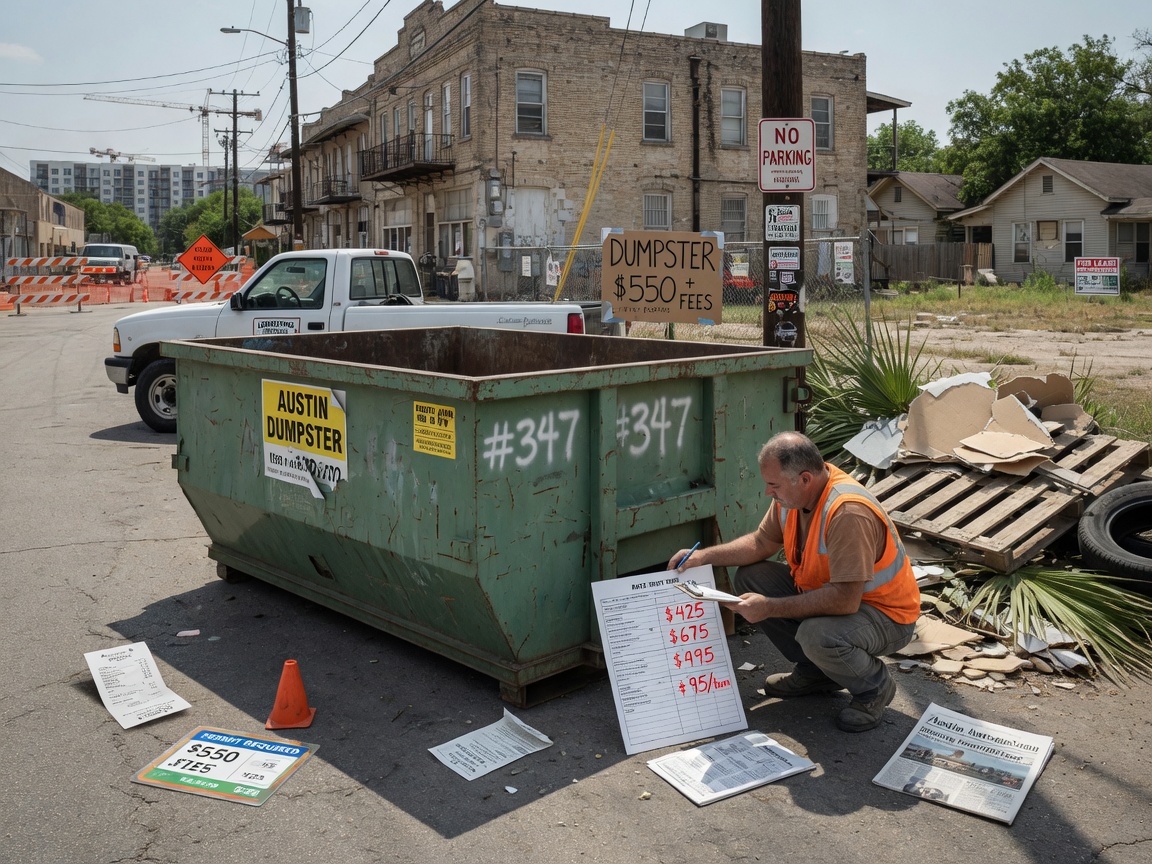
Several variables determine dumpster rental costs around Austin, starting with the container dimensions needed for the project, the number of days it stays on site, the accessibility of the drop-off location, and the category of debris being hauled away. These elements interact differently in dense areas like Downtown or Travis Heights compared with spread-out spots in Westlake or Barton Hills.
Container Size and Project Scope
The physical size of the dumpster directly sets the base rate because larger units require more truck capacity and landfill space. A 10-yard container suits small residential cleanouts in Hyde Park or Clarksville, while a 30-yard unit becomes necessary for full-home renovations in Mueller or Zilker. Homeowners tackling kitchen updates often discover that under-sizing leads to extra hauls and added fees, whereas oversizing wastes money on unused volume. Terrain around Lady Bird Lake or Mount Bonnell can further complicate placement, requiring smaller containers that fit narrow driveways. Choosing the right dimensions early prevents both overpayment and repeated trips. Readers planning renovations can review detailed sizing guidance in the article How to Choose Dumpster Size for Austin Home Renovation Projects.
Neighborhood Access and Local Terrain
Austin neighborhoods present distinct delivery challenges that affect final pricing. Narrow streets in Clarksville or South Congress limit truck maneuverability and may require smaller containers or extra labor. Properties near the Texas State Capitol or University of Texas Tower often have limited curb space, increasing the time needed for safe placement. In contrast, newer subdivisions in East Austin or Barton Hills usually offer wider driveways that accommodate standard roll-off units without issue. Travis County soil conditions after spring rains can turn yards soft, forcing crews to use plywood or alternative drop points. These access realities vary block by block and directly influence labor hours built into each quote.
Rental Duration and Seasonal Patterns
How long the container remains on site changes the total cost because most providers charge weekly or monthly extensions. Short-term needs during mild winter months keep rates lower, while hot humid summers bring higher demand for construction and landscaping projects. Spring wildflower season often coincides with outdoor cleanups around Zilker Park, tightening availability and pushing some customers toward longer bookings. Properties in Pflugerville or Cedar Park face similar timing pressures when families schedule renovations before school starts. Planning around these cycles helps avoid peak-season premiums. Additional placement considerations appear in Austin Storm Season Dumpster Placement Tips.
Waste Type and Disposal Rules
Material categories carry different landfill fees that appear on the final invoice. Clean construction debris from residential projects costs less than mixed loads containing household trash or yard waste. Travis County facilities apply strict sorting requirements, so contamination triggers re-handling charges. Renters in Round Rock or nearby communities sometimes pay more when loads include concrete or roofing shingles that demand separate handling. Accurate descriptions at booking time prevent surprise fees once the load reaches the scale house. Homeowners needing regular service can explore options through residential dumpster rental to match waste streams with appropriate container types.