2026-10-21 · Javier Soto
Austin Storm Season Dumpster Placement Tips
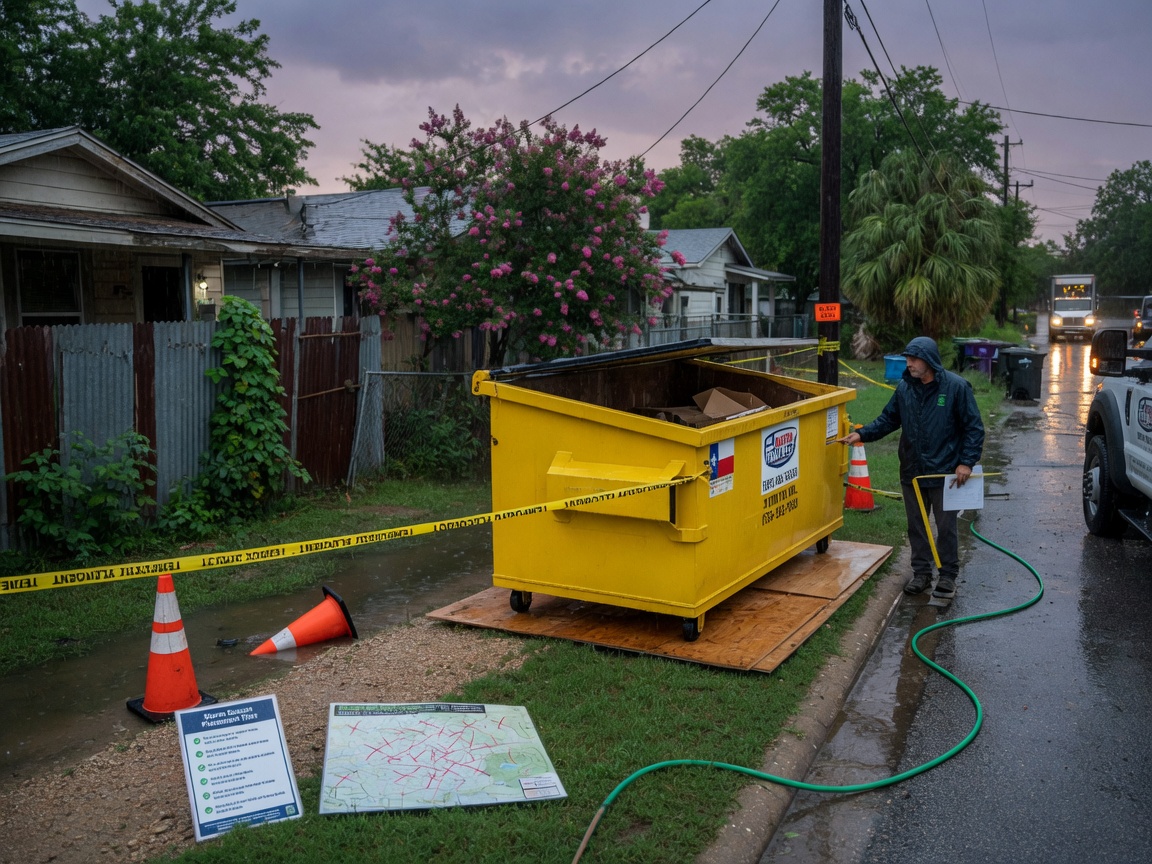
Place dumpsters on elevated, stable ground at least 15 feet from drainage ditches and low-lying spots when storms hit Austin. This approach keeps units accessible and prevents water from undermining the placement in neighborhoods with older infrastructure.
Assessing Local Terrain and Drainage
Austin's varied terrain creates specific placement challenges during storm season. Areas like Barton Hills and Zilker feature slopes that direct runoff quickly toward Lady Bird Lake, while flatter sections of East Austin and Hyde Park often collect water near older home foundations. Travis County soil, heavy with clay in many spots, holds moisture and turns soft under repeated rain, so operators check for firm limestone or gravel bases before setting a unit. In Mueller and Clarksville, tight lots leave little room for adjustment once rain starts, making pre-storm site walks essential. Placement on slight inclines facing away from streets helps water flow around rather than under the dumpster. Crews also note how spring wildflowers signal wetter ground in low pockets around Travis Heights. These checks reduce the chance of a unit settling unevenly or blocking alley access after a downpour.
Placement Strategies for Neighborhoods Near Waterways
Neighborhoods bordering Lady Bird Lake and Barton Springs Pool require extra distance from water edges during storm events. In Zilker and Barton Hills, dumpsters sit on the uphill side of properties to avoid rising water levels that can reach several feet in hours. East Austin and South Congress lots near older drainage systems need clearance from curb inlets that overflow fast. Crews position units parallel to driveways rather than across them so residents maintain access even if streets flood. Near the University of Texas Tower and Clarksville, narrow streets limit options, so units go on the highest available patch of concrete or compacted gravel. In Westlake and Hyde Park, tree cover can funnel debris, so open sight lines to the street help with quick retrieval if conditions worsen. These steps keep Residential Dumpster Rental projects on schedule without emergency moves.
Wind and Debris Considerations in Open Areas
Austin's humid summer storms often bring gusts that can shift unsecured dumpsters on open lots. In Mueller and around Mount Bonnell overlooks, units need wheel chocks or straps tied to fixed points when forecasts call for high winds. Debris from construction sites in Downtown and near the Texas State Capitol can blow into units, so lids stay closed between hauls. On larger residential jobs in Pflugerville or Cedar Park outskirts, crews stage dumpsters away from power lines that sway in gusts. Mild winter patterns mean fewer freeze-thaw cycles, but spring rains soften ground enough that wind can tilt an unblocked unit. Regular checks after each storm keep loads contained and prevent scattered material across streets in Travis County.
Timing and Monitoring During Peak Storm Months
Storm season peaks align with Austin's spring pattern of afternoon thunderstorms, so deliveries happen early in the day when forecasts allow. In Round Rock and nearby areas, crews monitor radar before heading out to sites in low-lying Travis County pockets. After placement, daily checks during wet periods catch shifting ground near Lady Bird Lake or Zilker Park edges. Homeowners in Hyde Park and Clarksville receive guidance on moving lightweight items away from the unit so nothing enters the load during high winds. This hands-on timing keeps What Affects Dumpster Rental Costs Around Austin projects predictable by avoiding weather-related delays.